How to Choose a Grow Light for Indoor Plants
Plain-language guidance on grow light types, brightness, color and placement, so you can pick something suitable without decoding spec sheets.
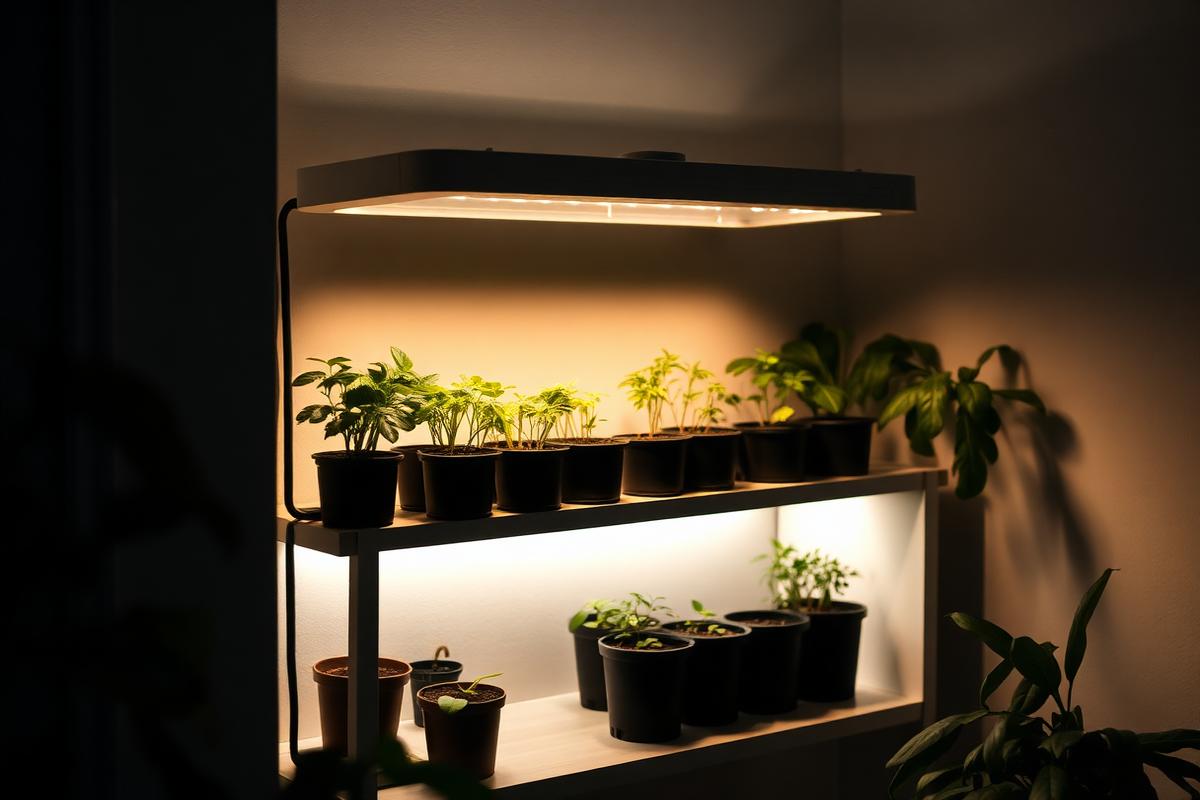
Grow lights look more complicated than they are. For a small home garden, a handful of practical questions will get you to a reasonable choice.
What kind of light do you need?
LED fixtures are the usual choice for home use: they run cool, use relatively little power, and come in shapes that suit shelves and sills. Clip-on lamps suit one or two pots; bar-style fixtures suit a shelf or a tray of seedlings.
Coverage matters more than raw power
A light that is bright directly underneath but dim at the edges will produce uneven plants. Match the fixture's footprint to the area you are actually growing in, rather than choosing the highest wattage available.
Color and appearance
Full-spectrum white lights are generally easiest to live with in a home, since purple-heavy fixtures can make a room uncomfortable. In a kitchen or living space, appearance is a legitimate factor.
Placement and distance
Follow the manufacturer's recommended hanging distance, then watch the plants: stretching stems suggest the light is too far or too weak, while pale or bleached leaves suggest it is too close.
Lighting schedules
Leafy greens and herbs are commonly run on a long daily light period, with a dark rest period every day. Check the guidance for the specific crop you are growing.
Choosing a light in five steps
- 1. Measure your growing area — sill, shelf or tray — in inches, and buy a fixture whose footprint covers it rather than a spotlight in the middle.
- 2. Match the crop: leafy greens and herbs are content with a modest light, while tomatoes, peppers and chiles need a noticeably stronger one over the same area.
- 3. Prefer full-spectrum white LEDs for living spaces; blurple fixtures work but make a kitchen unpleasant and hide leaf problems such as yellowing.
- 4. Check that the height is adjustable — chains, a gooseneck or a riser — because the right distance changes as plants grow.
- 5. Buy a plug-in timer at the same time. It costs little and is what makes day length consistent.
Distance and daily hours that work
- Seedlings: light 6-8 inches above the tray, 14-16 hours a day.
- Herbs and salad greens: 8-12 inches above the canopy, 12-14 hours a day.
- Fruiting crops: 10-12 inches above the canopy, 14-16 hours a day.
- Always give plants a continuous dark period of at least 6-8 hours; running a light 24 hours does not help and stresses most crops.
Reading the plants instead of the spec sheet
Plants tell you whether the light is right faster than any number on a box. Long bare stems and leaves reaching sideways mean too little light or too much distance — lower the fixture 2 inches or add two hours. Pale, bleached or curled leaf tips directly under the fixture mean it is too close; raise it 2-4 inches and check again in a week.
A worked example: one shelf, one bar light
For a 3-foot shelf holding herbs and salad, a single full-spectrum LED bar hung 10 inches above the pots and run 07:00-19:00 on a timer is enough, and typically costs a few dollars a month in electricity. If a dwarf tomato joins the shelf, it goes at the center of the bar where output is highest, and the run extends to 15 hours.
Frequently asked questions
More answers across every topic live on our indoor gardening FAQ.
The Growing Nook Editors
Editorial team
The Growing Nook editors write beginner-friendly indoor gardening guides based on small-space growing: windowsill herbs, salad pots, microgreen trays and shelf setups under LED lights. Every method here is written to be repeatable in an ordinary apartment or kitchen.
Related reading
How to Start an Indoor Garden With Very Little Natural Light
North-facing windows, basement apartments and shaded rooms are workable. Here is how to plan a low-light indoor garden.
7 min read
Indoor Gardening for Beginners: How to Start Your First Garden
A calm, step-by-step starting point: what to grow first, what you actually need to buy, and how to set up a small indoor garden you can keep alive.
9 min read
10 Easy Vegetables You Can Grow Indoors
Ten realistic container vegetables for a windowsill, shelf or countertop, with what each one needs and how much space to set aside.
8 min read
Enjoyed this guide?
Get occasional indoor gardening tips and inspiration by email.