10 Easy Vegetables You Can Grow Indoors
Ten realistic container vegetables for a windowsill, shelf or countertop, with what each one needs and how much space to set aside.
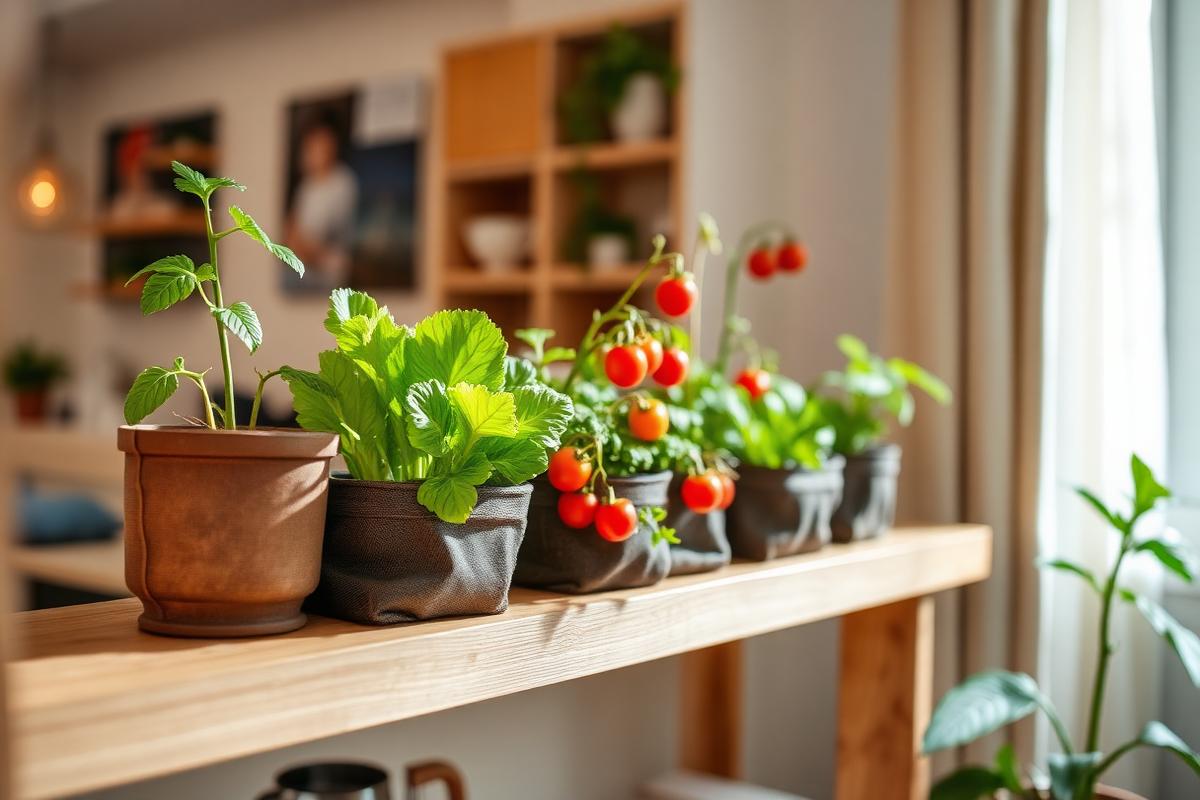
Not every vegetable is a good indoor candidate. The ones that work best are compact, fast, or harvested before they reach full size. Here are ten that suit a home setup.
Leafy greens
1. Loose-leaf lettuce
Shallow-rooted and quick. Harvest outer leaves and the plant keeps producing.
2. Spinach
Tolerates cooler rooms and moderate light. Best picked young.
3. Arugula
Fast from seed and strongly flavored, so a small tray goes a long way.
4. Kale
Slower than lettuce but productive over a long period in a deeper container.
Roots and alliums
5. Radishes
One of the fastest root crops. Needs a container deep enough for the root to form.
6. Green onions
Can be grown from seed or regrown from the white root ends of store-bought bunches.
7. Carrots (short varieties)
Choose round or short types bred for containers rather than long field varieties.
Fruiting plants
8. Dwarf tomatoes
Compact varieties are the ones to look for. These need the most light of anything on this list, usually supplemented with a grow light.
9. Chilli and sweet peppers
Slow to start but long-lived, and they handle warm indoor rooms well.
10. Bush beans
Dwarf bush types can crop in a large pot with strong light.
How to plant any of them, step by step
- 1. Choose the depth: 4-6 inches for salad leaves, 8 inches for radishes and short carrots, 10-12 inches for peppers, dwarf tomatoes and bush beans.
- 2. Check for drainage holes and set the pot on a saucer. A container without holes will drown roots no matter how carefully you water.
- 3. Fill with damp peat-free potting mix, leaving 1 inch at the top so water does not run over the edge.
- 4. Sow at roughly twice the seed's own depth — a quarter inch for lettuce and arugula, half an inch for radish and beans.
- 5. Give 12-16 hours of light a day. A south-facing sill can carry greens in summer; fruiting crops almost always need an LED.
- 6. Water when the top 1 inch is dry, then water until it runs from the base, and empty the saucer after ten minutes.
Realistic timings and yields
- Arugula: first cut in 21-28 days, then two or three more cuts from the same tray.
- Loose-leaf lettuce: 30-45 days to first picking, 8-10 weeks of cutting per pot.
- Radish: 25-35 days from sowing to pulling; sow a new row every two weeks.
- Green onions regrown from root ends: usable in 10-14 days, two or three regrowths before flavor fades.
- Dwarf tomato such as 'Tiny Tim' or 'Micro Tom': 60-80 days to the first ripe fruit under a strong light, then a handful of tomatoes a week.
A worked example: a three-foot shelf
On a single 40-inch shelf under one bar light you can run three 8-inch pots of lettuce staggered two weeks apart, one 10-inch pot of radishes, and a 12-inch pot with a dwarf tomato at the brightest end. That combination gives salad most weeks, a radish pull each month, and tomatoes through the second half of the season, from about 3 square feet of floor space.
Frequently asked questions
More answers across every topic live on our indoor gardening FAQ.
The Growing Nook Editors
Editorial team
The Growing Nook editors write beginner-friendly indoor gardening guides based on small-space growing: windowsill herbs, salad pots, microgreen trays and shelf setups under LED lights. Every method here is written to be repeatable in an ordinary apartment or kitchen.
Related reading
Indoor Gardening for Beginners: How to Start Your First Garden
A calm, step-by-step starting point: what to grow first, what you actually need to buy, and how to set up a small indoor garden you can keep alive.
9 min read
Best Herbs to Grow Indoors Year-Round
A shortlist of kitchen herbs that stay productive inside, plus placement, harvesting and how to keep a herb from going leggy.
7 min read
How to Choose a Grow Light for Indoor Plants
Plain-language guidance on grow light types, brightness, color and placement, so you can pick something suitable without decoding spec sheets.
8 min read
Enjoyed this guide?
Get occasional indoor gardening tips and inspiration by email.