How Often Should You Water an Indoor Garden?
There is no universal schedule. Here is how to read your own plants, soil and room instead of guessing.
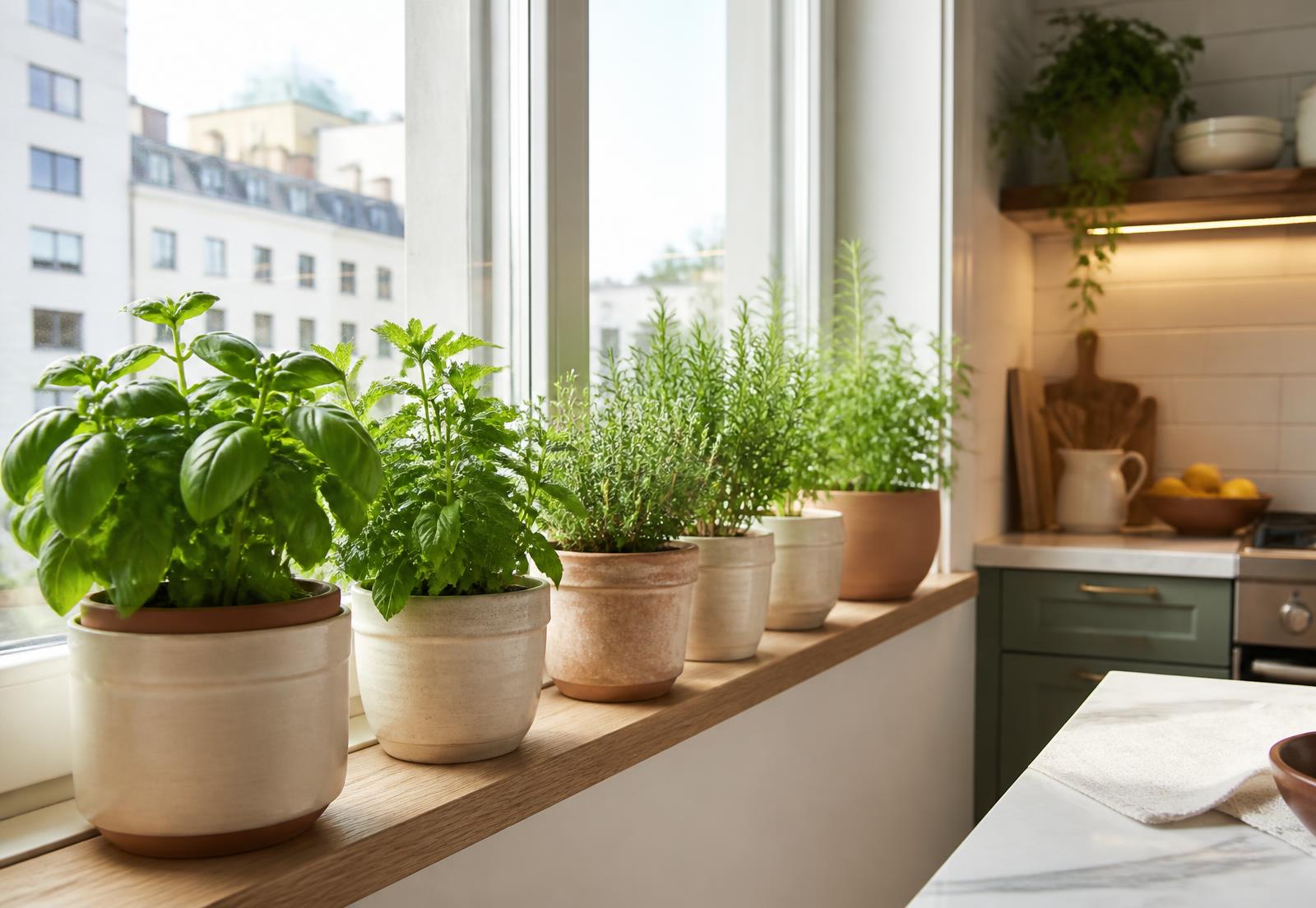
Watering is the most common question beginners ask and the one least suited to a fixed answer. How often you water depends on the plant, the pot, the mix, the light and the room.
Check, then water
Push a finger about an inch into the mix. If it feels damp, wait and check again the next day. If it feels dry at that depth, water thoroughly until liquid runs out of the drainage holes, then empty the tray.
What changes the frequency
- Small pots dry out faster than large ones
- Terracotta breathes and dries faster than glazed or plastic pots
- Warm, dry rooms and heating increase water use
- Plants under a strong grow light drink more than plants in dim corners
- Fast-growing leafy plants need more than slow, woody herbs
Signs you are getting it wrong
Too much water
Yellowing lower leaves, constantly damp soil and a sour smell often point to overwatering.
Too little water
Wilting that recovers quickly after watering, crisp leaf edges and mix pulling away from the sides of the pot suggest the plant is running dry.
The watering routine that works, step by step
- 1. Check first, water second. Push a finger 1 inch into the mix; if it is damp, walk away and check tomorrow.
- 2. When it is dry at that depth, water slowly until liquid runs from the drainage holes.
- 3. Wait ten minutes, then empty the saucer. Pots left standing in water are the fastest route to root rot.
- 4. Water in the morning where you can, so foliage and surface dry through the day.
- 5. Use room-temperature water; cold water straight from the tap slows root activity in warm rooms.
Rough frequencies by situation
- Small herb pot on a bright sill in summer: every 1-2 days.
- Same pot in a cool room in winter: every 4-7 days.
- 10-inch salad pot under an LED: every 2-3 days.
- Microgreens tray: light base watering daily.
- Thyme and rosemary: only when the top 1.5 inches is dry, often weekly or less.
Telling overwatering from underwatering
The two look alike at a glance because both end in wilting. Underwatered plants have dry, light pots, crisp edges and perk up within hours of a thorough soak. Overwatered plants stay heavy and damp, drop yellowing lower leaves, may smell sour at the soil surface, and do not recover after watering — the fix there is to stop watering, move the pot somewhere brighter and airier, and let it dry down.
A real example: a summer heatwave week
A basil pot that took water every third day in May can need it twice a day at 30C on a sunny sill. Rather than changing the schedule, keep checking with a finger each morning and evening during hot spells; the plant's needs move, the test does not.
Frequently asked questions
More answers across every topic live on our indoor gardening FAQ.
The Growing Nook Editors
Editorial team
The Growing Nook editors write beginner-friendly indoor gardening guides based on small-space growing: windowsill herbs, salad pots, microgreen trays and shelf setups under LED lights. Every method here is written to be repeatable in an ordinary apartment or kitchen.
Related reading
Indoor Gardening for Beginners: How to Start Your First Garden
A calm, step-by-step starting point: what to grow first, what you actually need to buy, and how to set up a small indoor garden you can keep alive.
9 min read
Indoor Garden Soil: What Beginners Actually Need
Potting mix, drainage and containers explained without jargon, plus why garden soil belongs outside.
6 min read
10 Indoor Gardening Mistakes Beginners Make
The recurring problems that discourage new indoor gardeners, and the small adjustments that prevent them.
7 min read
Enjoyed this guide?
Get occasional indoor gardening tips and inspiration by email.